Black Pregnancy Dangers, Deaths Seen as a ‘Completely Preventable’ Health Crisis_我的网站
A |
HOUSTON — Tonjanic Hill was overjoyed in 2017 when she learned she was 14 weeks pregnant. Despite a history of uterine fibroids, she never lost faith that she would someday have a child.
But, just five weeks after confirming her pregnancy, and the day after a gender-reveal party where she announced she was having a girl, she seemed unable to stop urinating. She didn’t realize her amniotic fluid was leaking. Then came the excruciating pain.
“I ended up going to the emergency room,” said Hill, now 35. “That’s where I had the most traumatic, horrible experience ever.”
An ultrasound showed she had lost 90% of her amniotic fluid. Yet, over the angry protestations of her nurse, Hill said, the attending doctor insisted Hill be discharged and see her own OB-GYN the next day. The doctor brushed off her concerns, she said. The next morning, her OB-GYN’s office rushed her back to the hospital. But she lost her baby, Tabitha Winnie Denkins.
“This is a public health crisis as it relates to Black moms and babies that is completely preventable,” said Barbie Robinson, who took over as executive director of Harris County Public Health in March 2021. “When you look at the breakdown demographically — who’s disproportionately impacted by the lack of access — we have a situation where we can expect these horrible outcomes.”
In fact, Harris County ranks third, behind only Chicago’s Cook County and Detroit’s Wayne County, in what are known as excess Black infant deaths, according to the federal Health Resources and Services Administration. Those three counties, which also are among the nation’s most populated counties, account for 7% of all Black births in the country and 9% of excess Black infant deaths, said Ashley Hirai, a senior scientist at HRSA. That means the counties have the largest number of Black births but also more deaths that would not occur if Black babies had the same chance of reaching their 1st birthdays as white infants.
No known genetic reasons exist for Black infants to die at higher rates than white infants. Such deaths are often called “deaths of disparity” because they are likely attributable to systemic racial disparities. Regardless of economic status or educational attainment, the stress from experiencing persistent systemic racism leads to adverse health consequences for Black women and their babies, according to a study published in the journal Women’s Health Issues.
These miscarriages and deaths can occur even in communities that otherwise appear to have vast health resources. In Harris County, for example, home to two public hospitals and the Texas Medical Center — the largest medical complex in the world, with more than 54 medical-related institutions and 21 hospitals — mortality rates were 11.1 per 1,000 births for Black infants from 2014 through 2019, according to the March of Dimes, compared with 4.7 for white infants.
The abundance of providers in Harris County hasn’t reassured pregnant Black patients that they can find care that is timely, appropriate or culturally competent — care that acknowledges a person’s heritage, beliefs and values during treatment.
Regardless of income or insurance status, studies show, medical providers often dismiss Black women’s questions and concerns, minimize their physical complaints and fail to offer appropriate care. By contrast, a study of 1.8 million hospital births spanning 23 years in Florida found that the gap in mortality rates between Black and white newborns was halved for Black babies when Black physicians cared for them.
In 2013, Houstonian Kay Matthews was running a successful catering business when she lost the daughter she’d named Troya eight months and three weeks into pregnancy.
Matthews hadn’t felt well — she’d been sluggish and tired — for several days, but her doctor told her not to worry. Not long afterward, she woke up realizing something was terribly wrong. She passed out after calling 911. When she woke up, she was in the emergency room.
None of the medical staffers would talk to her, she said. She had no idea what was happening, no one was answering her questions, and she started having a panic attack.
“It kind of felt like I was watching myself lose everything,” she recalled. She said the nurse seemed annoyed with her questions and demeanor and gave her a sedative. “When I woke up, I did not have a baby.”
Matthews recalled one staffer insinuating that she and her partner couldn’t afford to pay the bill, even though she was a financially stable business owner, and he had a well-paying job as a truck driver.
She said hospital staffers showed minimal compassion after she lost Troya. They seemed to dismiss her grief, she said. It was the first time she could remember feeling as if she was treated callously because she is Black.
“There was no respect at all, like zero respect or compassion,” said Matthews, who has since founded the Shades of Blue Project, a Houston nonprofit focused on improving maternal mental health, primarily for Black patients.
To help combat these high mortality rates in Harris County, Robinson created a maternal child and health office and launched a home-visit pilot program to connect prenatal and postpartum patients with resources such as housing assistance, medical care and social services. Limited access to healthy food and recreational activities are barriers to healthy pregnancy outcomes. Studies have also shown a connection between evictions and infant mortality.
For Hill, not having insurance was also likely a factor. While pregnant, Hill said, she had had just a single visit at a community health center before her miscarriage. She was working multiple jobs as a college student and did not have employer-provided medical coverage. She was not yet approved for Medicaid, the state-federal program for people with low incomes or disabilities.
Texas has the nation’s highest uninsured rate, with nearly 5 million Texans — or 20% of those younger than 65 — lacking coverage, said Anne Dunkelberg, a senior fellow with Every Texan, a nonprofit research and advocacy institute focused on equity in public policy. While non-Hispanic Black Texans have a slightly better rate — 17% — than that overall state level, it’s still higher than the 12% rate for non-Hispanic white Texans, according to census data. Health experts fear that many more people are losing insurance coverage as COVID-19 pandemic protections end for Medicaid.
Without full coverage, those who are pregnant may avoid seeking care, meaning they skip being seen in the critical first trimester, said Fatimah Lalani, medical director at Houston’s Hope Clinic.
Texas had the lowest percentage of mothers receiving early prenatal care in the nation in 2020, according to the state’s 2021 Healthy Texas Mothers and Babies Databook, and non-Hispanic Black moms and babies were less likely to receive first-trimester care than other racial and ethnic groups. Babies born without prenatal care were three times as likely to have a low birth weight and five times as likely to die as those whose mothers had care.
Hill’s twins, though premature, are now preschoolers. “I believe God — and the high-risk doctor — saved my twins,” she says.(Brandon Thibodeaux/KFF Health News)
If Hill’s miscarriage reflects how the system failed her, the birth of her twins two years later demonstrates how appropriate support has the potential to change outcomes.
With Medicaid coverage from the beginning of her second pregnancy, Hill saw a high-risk pregnancy specialist. Diagnosed early with what’s called an incompetent cervix, Hill was consistently seen, monitored and treated. She also was put on bed rest for her entire pregnancy.
She had an emergency cesarean section at 34 weeks, and both babies spent two weeks in neonatal intensive care. Today, her premature twins are 3 years old.
“I believe God — and the high-risk doctor — saved my twins,” she said.
This article was produced by KFF Health News, a national newsroom that produces in-depth journalism about health issues and is one of the core operating programs at KFF. It has been published with permission.
B | 今年6月,名创优品青岛首家“一拖二”双层旗舰店亮相青岛上街里MALL容匯城,门店总面积达600平方米,开业首日进店人次近9000,当日销售额位列山东省内所有名创优品门店第一。
C | 8月初,名创优品弘阳广场YOYO主题店开业,为济南面积最大的IP集合主题店,店内SKU超5000款,IP联名、二次元周边占比大幅提升。 同样在8月,次元结界(北方首店)携变形金刚授权店金刚荟(北方首店)、七点谷·九州燃漫全国首店集中亮相青岛上街里MALL容匯城。据七点谷·九州燃漫主理人任文栋介绍,店内备货的500份单价99元的二次元盲盒,在上架不足半小时已全部被抢空。
潮玩巨头泡泡玛特则以门店提质+跨界快闪双线布局。近期,泡泡玛特高级副总裁褚音表示,公司下半年将移位改造几十家门店,业内人士称,作为重要消费市场,山东门店或将涵盖在内。 济南一位长期收集IP谷子的消费者告诉记者:“往年热门新品、限定谷子,往往优先上线南方一线城市门店,现在济南、青岛上新速度明显变快,以后也不用长期蹲线上代购了。” 山东缘何成为“谷子经济”新热土?
潮玩巨头抢滩、本土企业崛起的背后,是山东独有的政策红利与产业优势。 2026年5月,山东省工业和信息化厅发布公告,就《关于推进消费品供需适配促进消费扩容升级的工作方案》公开征求意见。方案首次在省级政策中明确写入“谷子经济”“IP消费”“悦己经济”等新潮词汇。
D | 方案提出,大力发展IP消费,扩大谷子经济、悦己经济等新供给;支持济南、青岛对标建设国际消费中心城市。
E | 到2028年底,全省将培育省级以上消费名品超330个。 政策落地迅速跟进。济南作为全国首批消费新业态新模式新场景试点城市,市商务局、市财政局联合印发《济南市消费新业态新模式新场景试点项目和资金管理办法》。 其中,对联动国潮动漫、影视IP打造综合性消费场景的项目,有效投资不低于300万元的,最高可获2000万元奖励;对开设IP主题店、概念店、联名店,开业后6个月内主营业务收入达200万元以上的,最高奖励100万元。 政策之外,山东还有着得天独厚的产业“底牌”。
F | 佩觿文化梦工厂负责人孟祥坤算过一笔账:山东工业门类齐全,树脂、塑胶等原材料可就地取材,大幅降低了物流采购成本;济南扎实的工业基础,也为文创产业提供了难得的制造支撑;同时济南在AI与激光领域的产业积累,正与手办制作深度融合。 数据显示,2025年,山东社会消费品零售总额达4.2万亿元。当万亿消费体量遇上“谷子经济”的千亿风口,山东,正在成为这场新消费革命中极具想象力的战场。
Current article:http://6bx.cengzaodengchawonin.cyou/6sj/20260826/1842219.html


 近百家文创类公司注册成立,山东潮玩原创力加速攀升
所谓“谷子”,是英文Goods(商品)的谐音,特指二次元周边的衍生经济。盲盒、手办、吧唧(徽章)……这些被Z世代统称为“谷子”的周边产品,正以惊人的速度撑起一个千亿级市场。2025年,中国潮玩市场规模达879.7亿元,同比增长21%,首次超越传统玩具市场的801.3亿元。 长期以来,手办潮玩的研发生产高度集中于珠三角与长三角,北方市场消费力旺盛,却始终缺乏根植于本土的头部供应链。这一格局,正被一家济南企业打破。 8月20日,济南佩觿文化创意有限公司3D打印体验馆、原画设计馆正式投入试运营,这家本土文创企业也迎来转型升级的重要时刻。 作为山东首家打通“原画设计—量产销售”全产业链闭环的企业,济南佩觿文化创意有限公司填补了北方潮玩供应链的空白。公司构建起IP获取、原画设计、3D建模、打样试制、量产加工、市场销售的完整产业闭环。 去年,公司营收突破6亿元,集聚上下游企业48家。其与产线协同运转的自建“趟瀛”智能生态平台,已汇聚300多个原创IP、连接5万余用户。 “我们计划开展‘研学游’,与周边高校合作定向培育,让周围的年轻人有机会从买手办的人变成做手办的人。”梦工厂负责人孟祥坤说。
近百家文创类公司注册成立,山东潮玩原创力加速攀升
所谓“谷子”,是英文Goods(商品)的谐音,特指二次元周边的衍生经济。盲盒、手办、吧唧(徽章)……这些被Z世代统称为“谷子”的周边产品,正以惊人的速度撑起一个千亿级市场。2025年,中国潮玩市场规模达879.7亿元,同比增长21%,首次超越传统玩具市场的801.3亿元。 长期以来,手办潮玩的研发生产高度集中于珠三角与长三角,北方市场消费力旺盛,却始终缺乏根植于本土的头部供应链。这一格局,正被一家济南企业打破。 8月20日,济南佩觿文化创意有限公司3D打印体验馆、原画设计馆正式投入试运营,这家本土文创企业也迎来转型升级的重要时刻。 作为山东首家打通“原画设计—量产销售”全产业链闭环的企业,济南佩觿文化创意有限公司填补了北方潮玩供应链的空白。公司构建起IP获取、原画设计、3D建模、打样试制、量产加工、市场销售的完整产业闭环。 去年,公司营收突破6亿元,集聚上下游企业48家。其与产线协同运转的自建“趟瀛”智能生态平台,已汇聚300多个原创IP、连接5万余用户。 “我们计划开展‘研学游’,与周边高校合作定向培育,让周围的年轻人有机会从买手办的人变成做手办的人。”梦工厂负责人孟祥坤说。 除了济南佩觿,更多文创类公司积极在山东落子扎根。记者检索企查查看到,近三个月时间,山东共成立文艺创作类公司超500家,其中文创类公司近百家,最高注册规模1000万元,部分注册规模在100万元—500万元间。 首店、旗舰店接连落子,巨头深挖增量市场
本土企业发力之际,外地巨头也在加快在鲁布局。
除了济南佩觿,更多文创类公司积极在山东落子扎根。记者检索企查查看到,近三个月时间,山东共成立文艺创作类公司超500家,其中文创类公司近百家,最高注册规模1000万元,部分注册规模在100万元—500万元间。 首店、旗舰店接连落子,巨头深挖增量市场
本土企业发力之际,外地巨头也在加快在鲁布局。

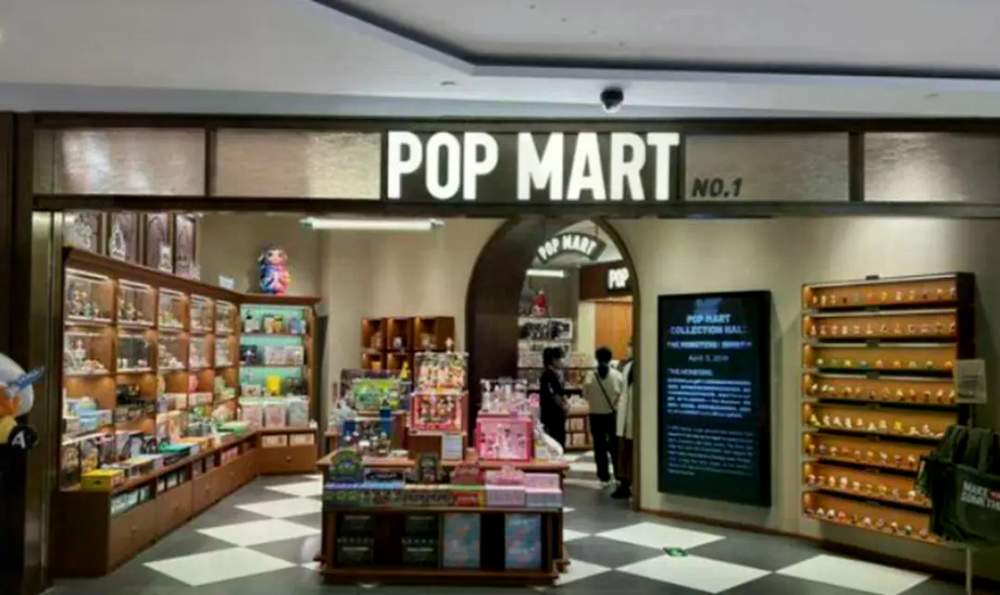 潮玩巨头泡泡玛特则以门店提质+跨界快闪双线布局。近期,泡泡玛特高级副总裁褚音表示,公司下半年将移位改造几十家门店,业内人士称,作为重要消费市场,山东门店或将涵盖在内。 济南一位长期收集IP谷子的消费者告诉记者:“往年热门新品、限定谷子,往往优先上线南方一线城市门店,现在济南、青岛上新速度明显变快,以后也不用长期蹲线上代购了。” 山东缘何成为“谷子经济”新热土?
潮玩巨头抢滩、本土企业崛起的背后,是山东独有的政策红利与产业优势。 2026年5月,山东省工业和信息化厅发布公告,就《关于推进消费品供需适配促进消费扩容升级的工作方案》公开征求意见。方案首次在省级政策中明确写入“谷子经济”“IP消费”“悦己经济”等新潮词汇。
潮玩巨头泡泡玛特则以门店提质+跨界快闪双线布局。近期,泡泡玛特高级副总裁褚音表示,公司下半年将移位改造几十家门店,业内人士称,作为重要消费市场,山东门店或将涵盖在内。 济南一位长期收集IP谷子的消费者告诉记者:“往年热门新品、限定谷子,往往优先上线南方一线城市门店,现在济南、青岛上新速度明显变快,以后也不用长期蹲线上代购了。” 山东缘何成为“谷子经济”新热土?
潮玩巨头抢滩、本土企业崛起的背后,是山东独有的政策红利与产业优势。 2026年5月,山东省工业和信息化厅发布公告,就《关于推进消费品供需适配促进消费扩容升级的工作方案》公开征求意见。方案首次在省级政策中明确写入“谷子经济”“IP消费”“悦己经济”等新潮词汇。


